


Base course reinforcement for petrol stations and service areas
Project information
Construction project
Petrol station and service area on the B5Customer
PaRaMi HandelsgesellschaftConstruction
Fa. DittingLocation
Witzwort , DEPlaning
Ingenieurbüro Heinrich, Lohe-Fohrden,Construction time
November 1999 bis May 2000Products used
Project details


Situation
The entire construction site, covering approximately 7,800 m², on which the service station and rest area was to be built, was underlain by thick layers of clay and peat. Even when the site was driven over by light vehicles, severe rutting was evident. Plate load tests carried out on site yielded Ev2 values that were barely measurable. Furthermore, excessive water accumulation was observed across the entire construction site, resulting in a reduced bearing capacity of the sub-base.
Solution
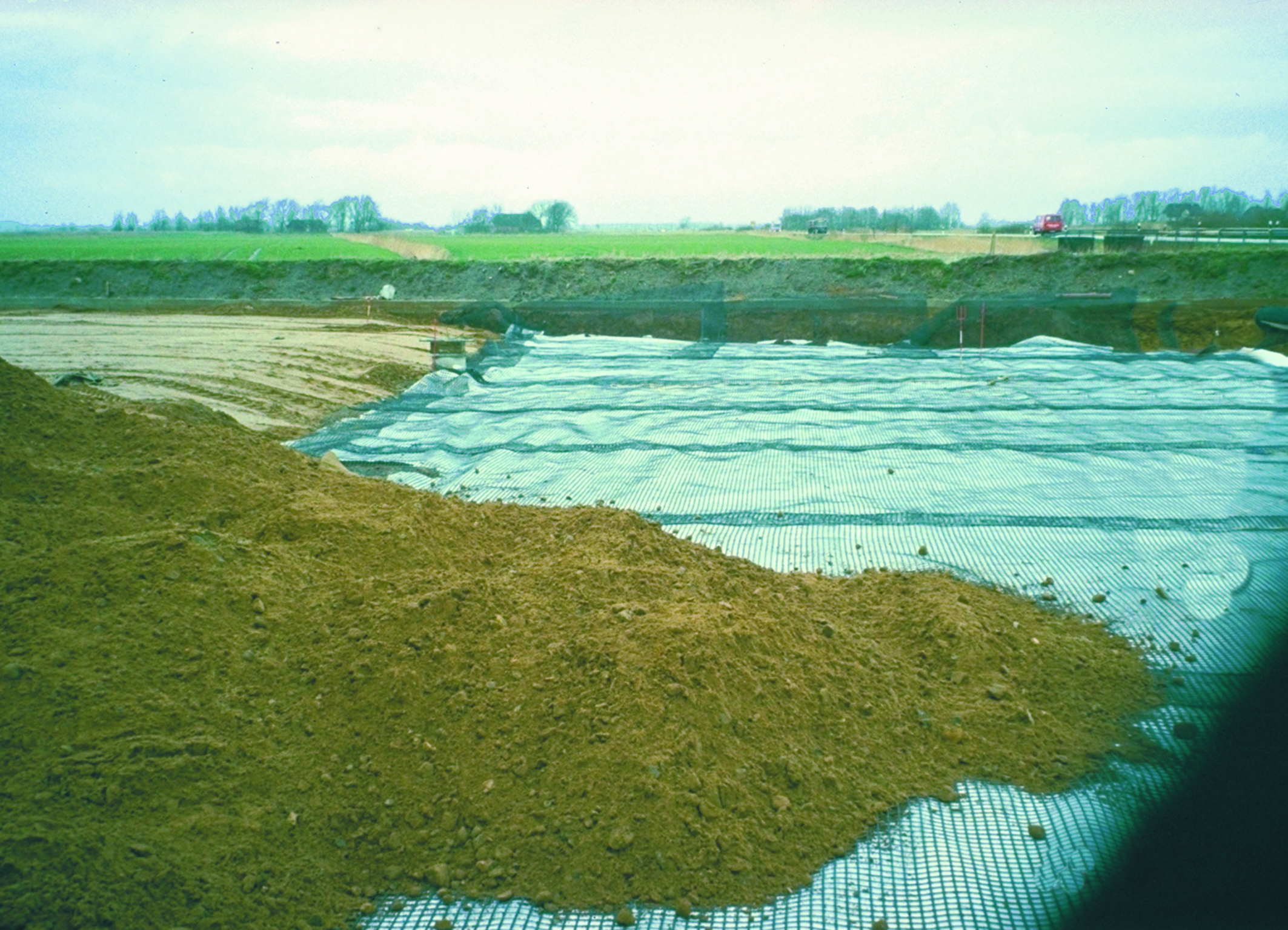
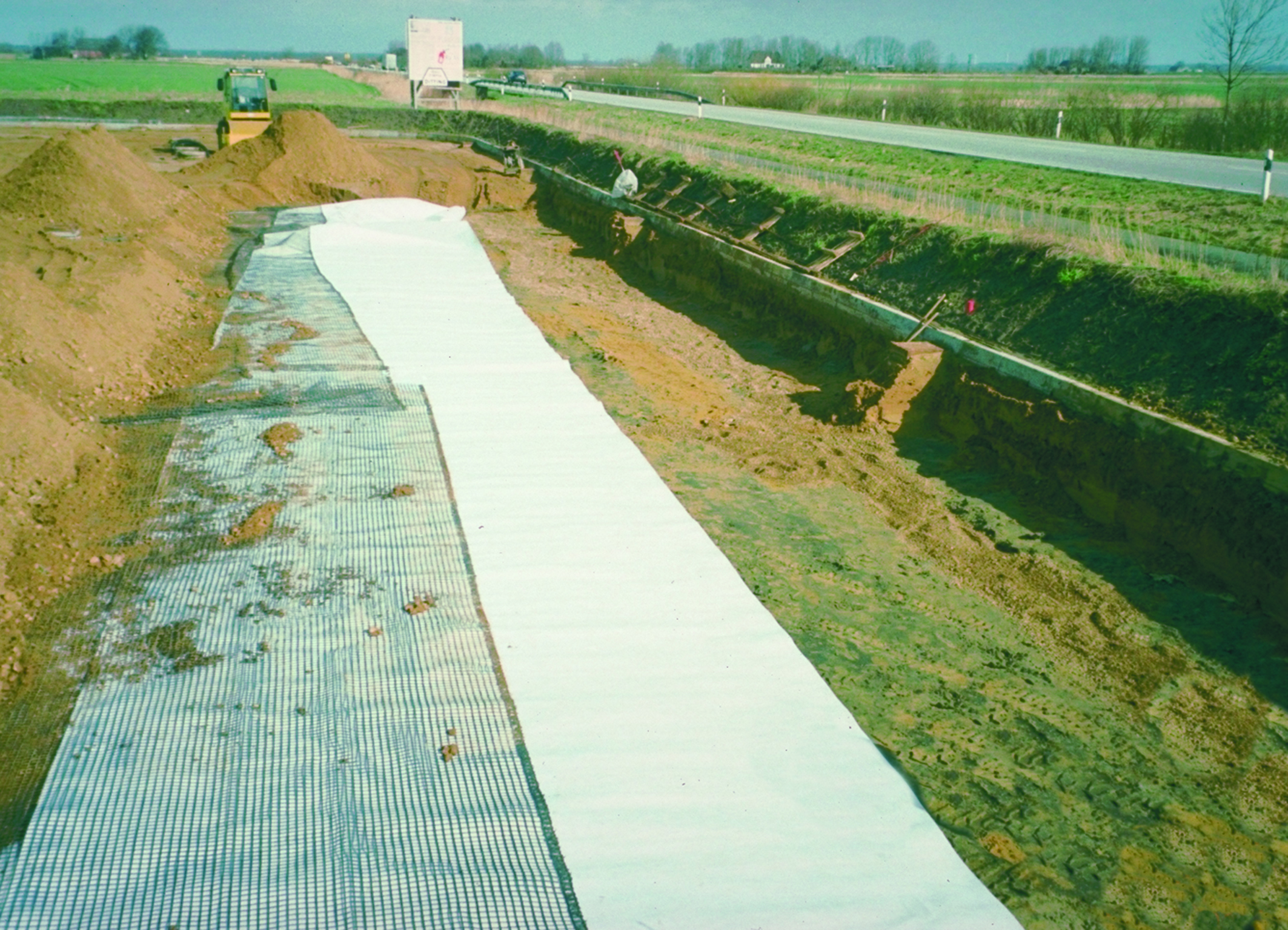
Due to the difficult initial conditions, geosynthetic reinforcement was proposed to increase bearing capacity and minimise settlement. Beneath the future fuel storage areas and their operational zone, the soil was completely replaced to a depth of approximately 3.50 m. The plant building was founded on piles. For the remaining areas (approx. 5,000 m²), only the portion of clay necessary for frost-resistant foundations was removed. To manage the extreme water accumulation and drain the area, drainage lines were installed beneath the outdoor facilities. A combination of a compacted geotextile and a high-tensile, flexible biaxial polyester geogrid was laid on top of this. Over this, a 0.60 m thick base course consisting of a gravel/sand mixture was applied using the ‘pre-compaction’ method.
Advantages
The construction method used in this project demonstrated that the required load-bearing capacity could be reliably achieved by using a high-tensile, flexible polyester geogrid. This construction method was of great significance for the economic aspects of the project, as it made it possible to avoid costly soil replacement in the traffic areas. The load-bearing capacity checks carried out continuously during the construction work under the supervision of the designer confirmed that the specified requirements were met at all test points. The earthworks were therefore carried out professionally and on schedule and were successfully completed.
Further information