


Suspension of a sinkhole on the Aschersleben bypass
Project information
Construction project
B6n Aschersleben bypassConstruction
Paul Wiegand GmbH & Co. KG Umwelttechnik und Wasserbau GmbH, ErmslebenLocation
Aschersleben , DEPlaning
Baugrundinstitut Knierin GmbH, LeipzigProducts used
Project details


Situation
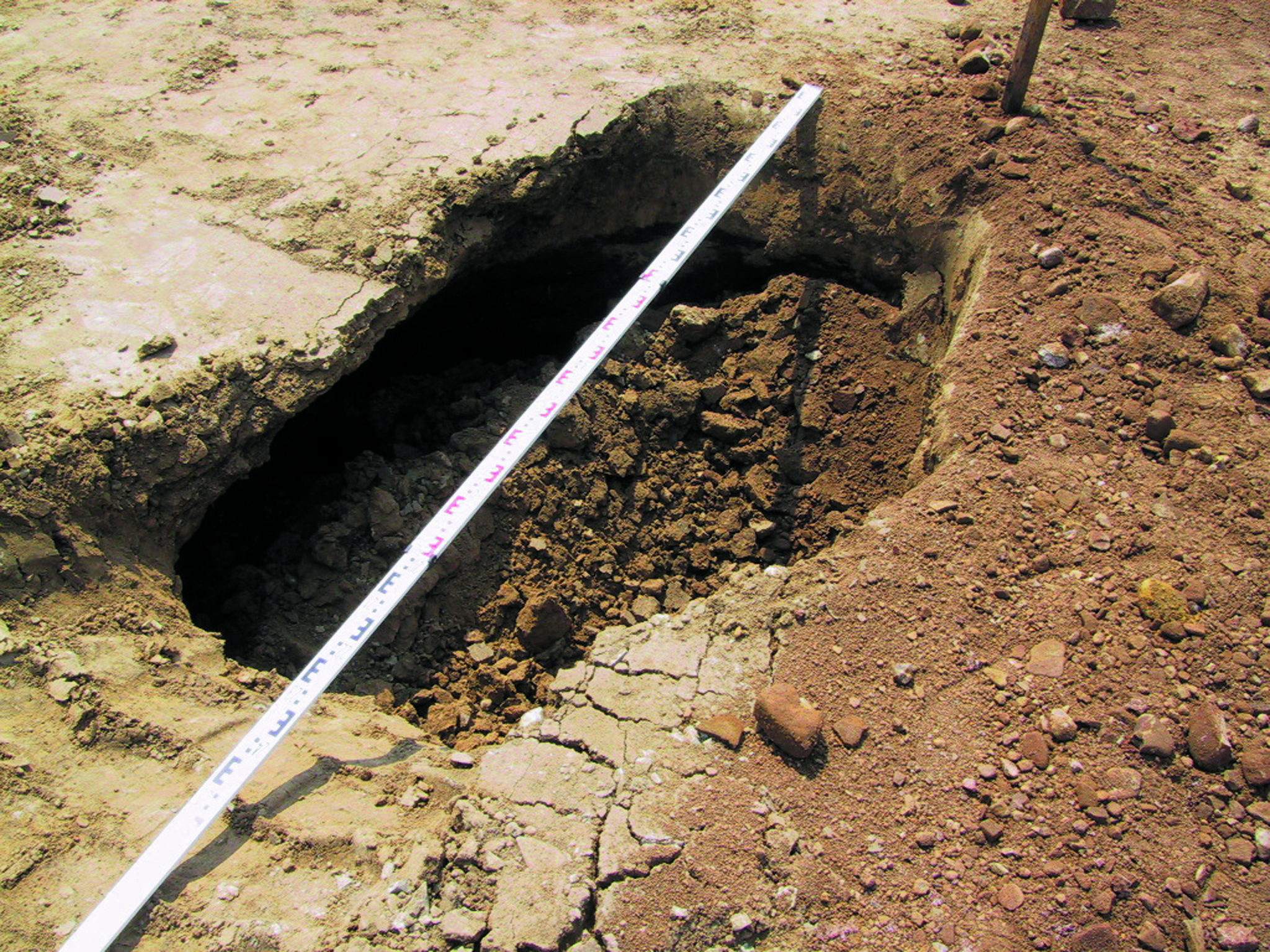
A section of the B 6n between the A 395 and the A 14 runs north and west of Aschersleben in Saxony-Anhalt. It crosses a landscape prone to sinkholes. These are caused by the collapse of underground cavities that can extend to the surface. A distinction is made between sinkholes and subsidence based on their cause. Sinkholes have geological causes; they develop because of underground erosion processes. Subsidence occurs due to the collapse of old mining structures such as tunnels and shafts. The option of backfilling underground cavities and thereby securing the route had to be rejected, as a residual risk of undiscovered cavities remains despite extensive exploration. Structures using reinforced concrete slabs or geosynthetics were considered as solutions for bridging areas at risk of collapse.
Solution
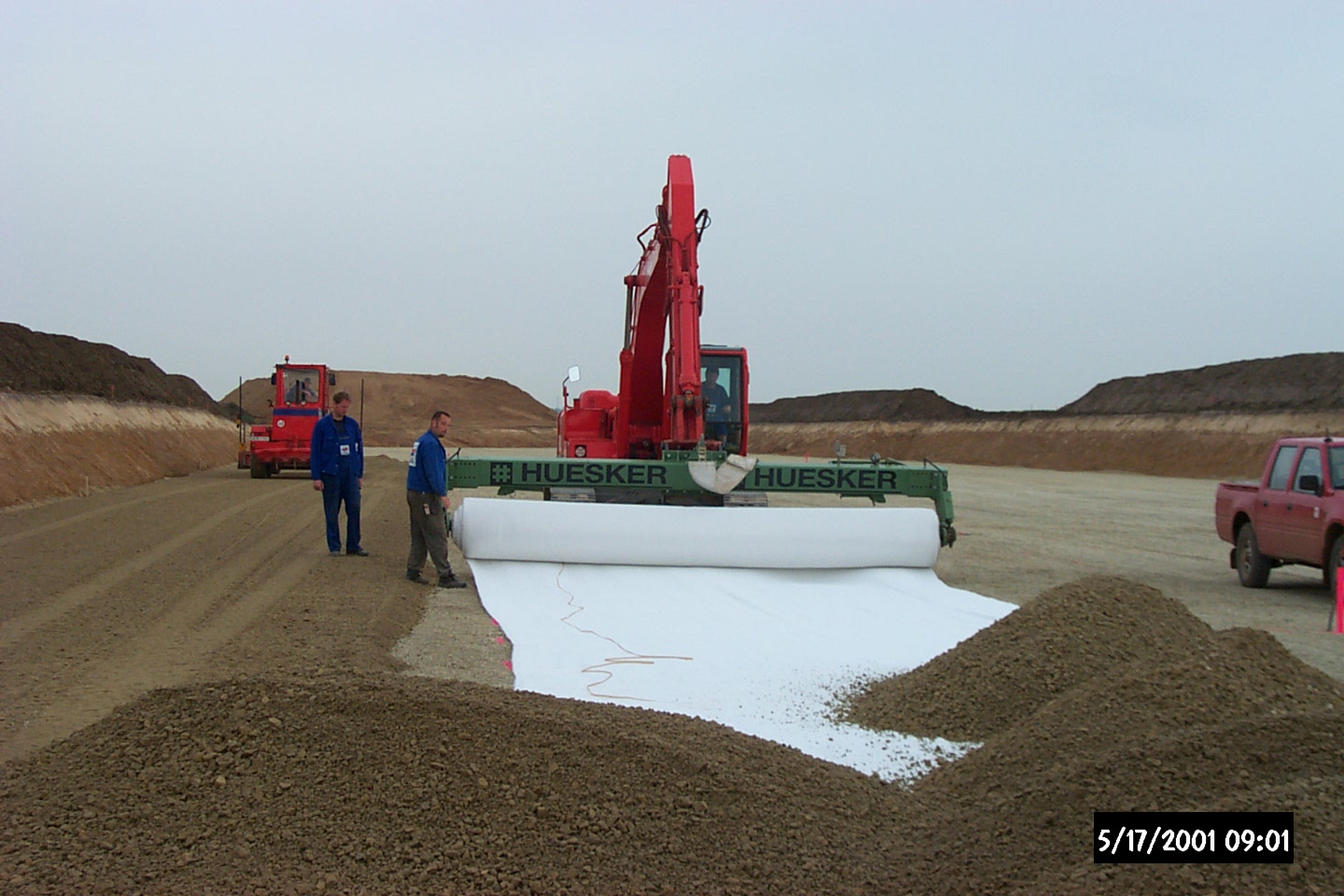
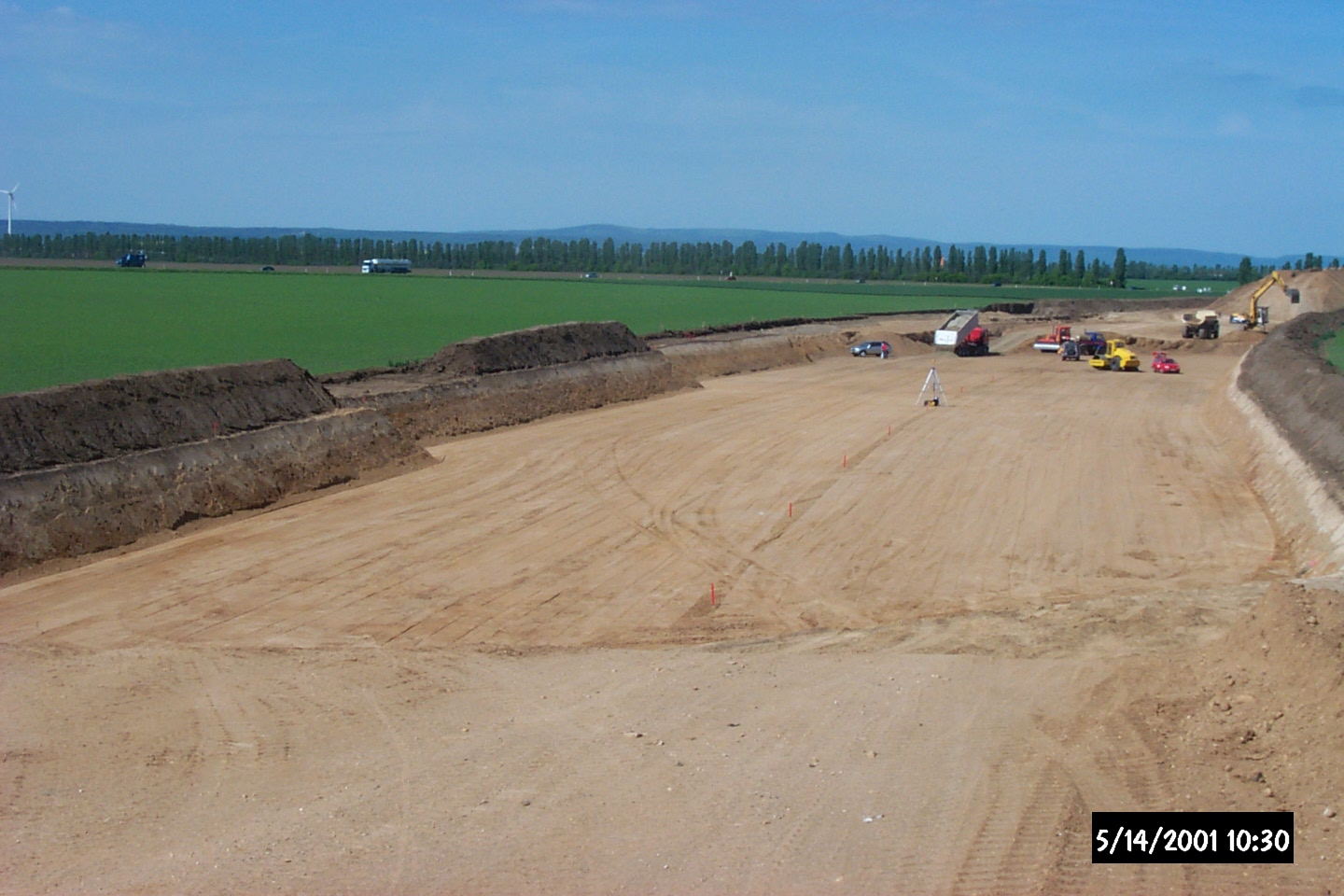
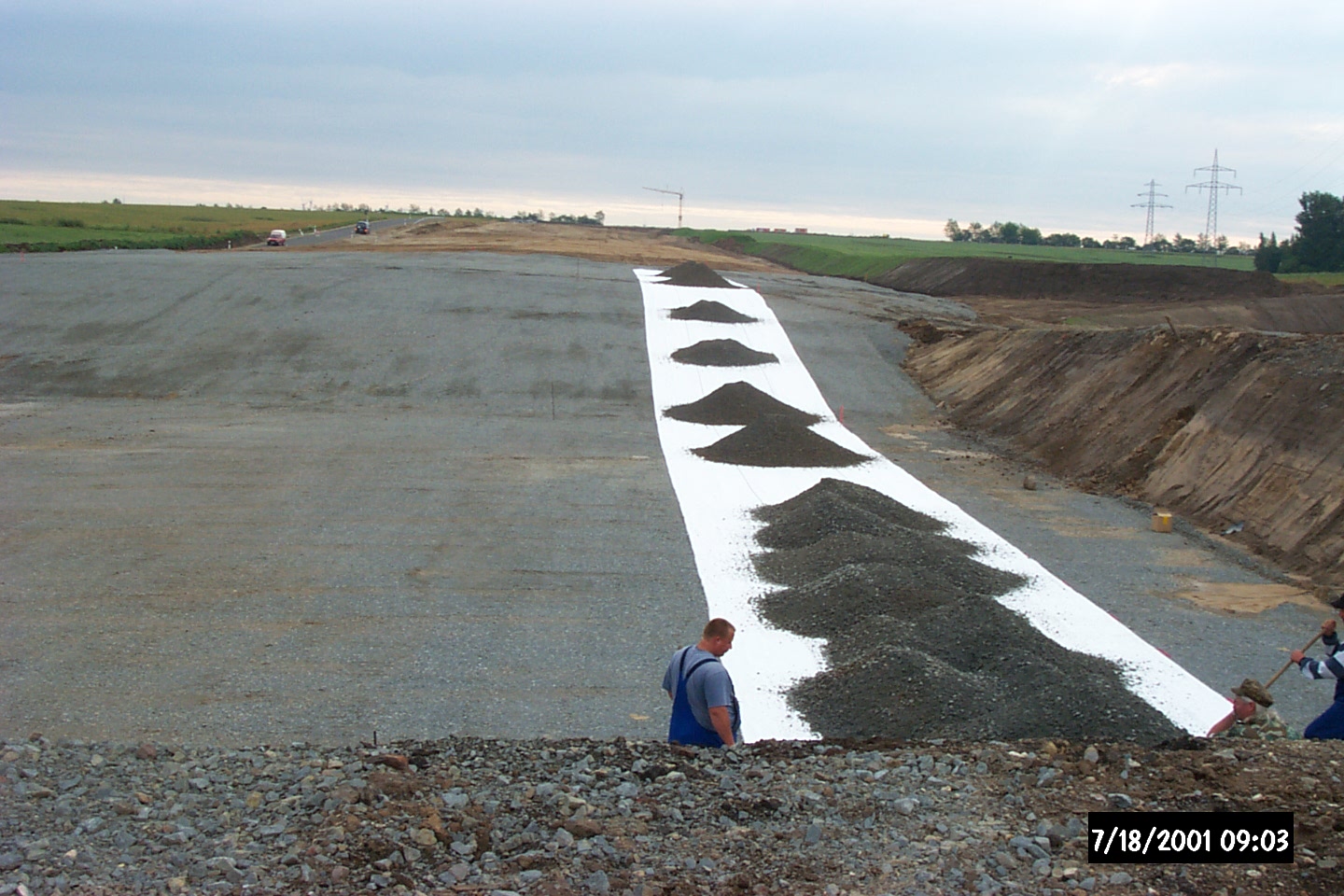
Within a few weeks, the works for construction section 10.1 were carried out by VBU Verkehrsbau Union GmbH Magdeburg and for construction section 10.2 by the ARGE B 6n consortium, comprising the construction company Paul Wiegand GmbH & Co.KG and Umwelttechnik & Wasserbau GmbH Ermsleben, under constant technical supervision. A high-performance geotextile was rolled out using a specially developed laying machine, positioned with great precision and installed in a pre-stressed state. Only this method of laying or construction ensures immediate transfer of tensile force in the event of ground subsidence.
Advantages
- Ductile system behaviour
- Flexibility and optimisation during installation through single- or double-layer reinforcement
- Laying direction and positioning of the sheets according to the laying plan
- Cost-effective due to savings in installation effort and time
Further information