


Steep slope as a protective barrier against rockfall
Project information
Construction project
Construction of a new steep slope using a GRS-SystemCustomer
SST-Schuster Spreng Technik GmbHConstruction
SST-Schuster Spreng Technik GmbHLocation
Badersdorf, Austria , ATPlaning
SST-Schuster Spreng Technik GmbHConstruction time
January – February 2021Products used
Project details


Situation
The operator of the Badersdorf quarry in Burgenland, Austria, was seeking a suitable solution to protect both employees and buildings located in the immediate vicinity of a rock slope from falling rock fragments. As there was no longer any active quarrying in the affected section of the rock face at the time of planning, the protective structure only needed to be designed for weather-related rockfall. Owing to the short distance between the rock slope requiring protection and the operational buildings, a particularly space-saving solution had to be found.
Solution
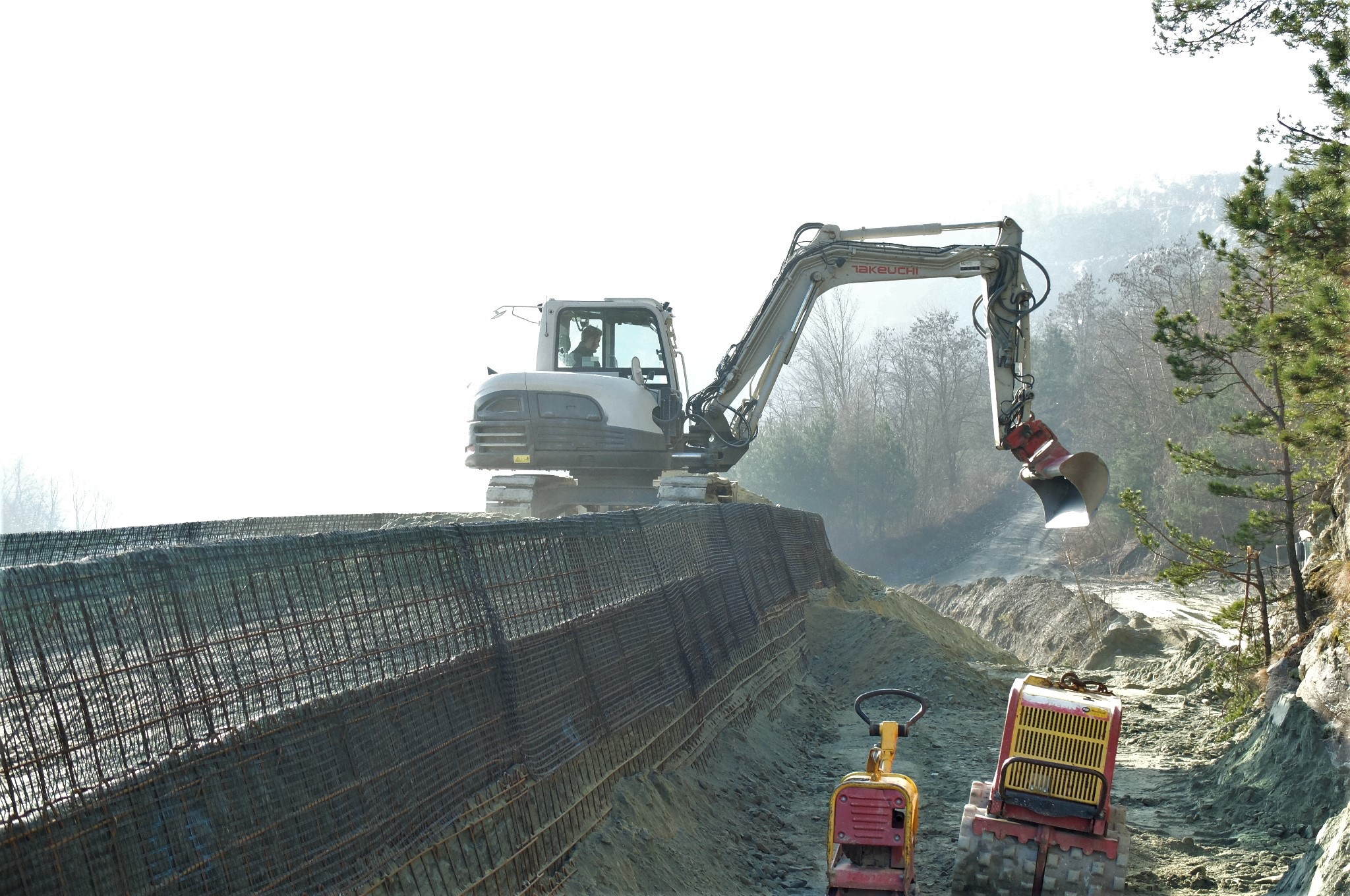
In order to provide the most comprehensive protection possible while also minimising the space required, it was decided to construct a steep slope using geosynthetic-reinforced soil (GRS), with a catchment area behind it for falling rock material. A particular challenge lay in the relatively short possible anchorage lengths of the geogrids in relation to the height of the structure, which were dictated by the geometric boundary conditions. Compared with GRS structures with greater anchorage lengths, this created an increased risk of sliding and bulging of the structure. It was therefore necessary to examine the feasibility carefully and comprehensively in advance and, where appropriate, to plan additional stabilisation measures. As a first step, it was necessary to determine the potential volume of rock masses that might fall. From this, the resulting forces could be derived, acting both vertically and horizontally as a result of the retention of the falling material in the catchment area behind the steep slope.
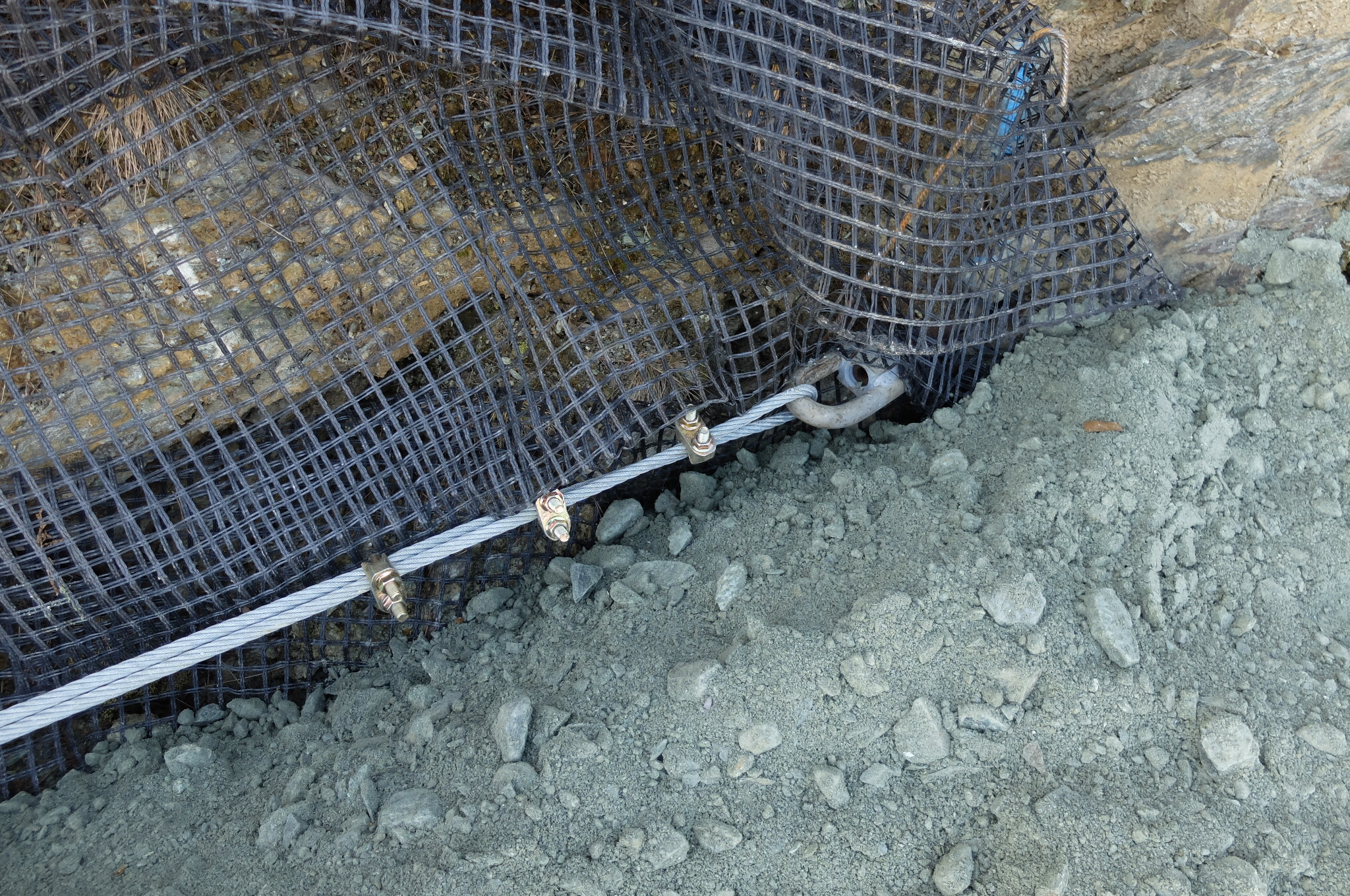
Before construction began, the rock face was prepared by removing loose stones and debris, and a level area was created at the base of the GRS structure in order to ensure a stable bearing surface. To prevent subsequent heaving of the earth structure, geogrids were back-anchored at regular intervals into the natural rock formation by means of steel cables installed in the rock.
Regular inspection of the reinforced steep slope is necessary so that signs of instability or possible damage can be identified at an early stage. To ensure long-term protective performance, maintenance measures such as the removal of accumulated debris should be carried out as required.
Advantages
The implemented geosynthetic-reinforced steep slope creates an effective protective barrier that intercepts falling rocks, thereby providing reliable and low-maintenance protection for workers and buildings.
Compared with other solutions, the GRS structure does not prevent the rock material from falling, but it does effectively prevent damage in the areas below. In the event of larger volumes of rockfall, it is necessary to remove the collected material. A sudden failure of the structure is not to be expected, as significant changes, such as an excessive build-up of rock material, can be identified at an early stage through regular monitoring.
Overall, the chosen solution offers an efficient, environmentally compatible and sustainable approach to reducing the risks posed by potential rockfall, improving the safety of quarry workers, and ensuring the sustainable use of the buildings.
Further information